
Different Types of Breast Disease and Symptoms
What are the Breasts (Mammary Glands)?
The breasts, located on the front of the chest, are medically known as the mammary glands. The term “breast” is sometimes used to refer to the area at the front of the chest. The breast is the tissue overlying the chest (pectoral) muscles.
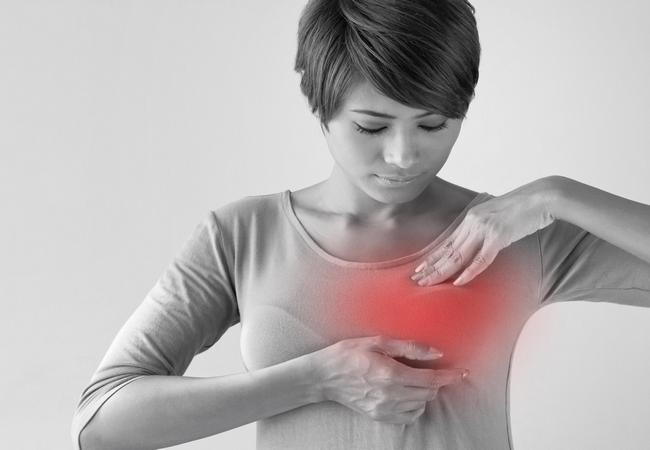
Women’s breasts are made of specialized tissue that produces milk (glandular tissue) as well as fatty tissue. The amount of fat determines the size of the breast. The milk-producing part of the breast is organized into 15 to 20 sections, called lobes.
All Types of Breast Disease and Symptoms:
1. Breast cancer:
Malignant (cancer) cells multiplying abnormally in the breast, eventually spreading to the rest of the body if untreated. Breast cancer occurs almost exclusively in women, although men can be affected. Signs of breast cancer include a lump, bloody nipple discharge, or skin changes
2. Ductal carcinoma in situ (DCIS):
Breast cancer in the duct cells that has not invaded deeper or spread through the body. Women diagnosed with DCIS have a high likelihood of being cured.
3. Lobular carcinoma in situ (LCIS):
Although called a carcinoma LOIS, which occurs in the milk-producing lobule cells, does not invade or spread and is not a true cancer. However, women with LCIS have an increased likelihood of developing invasive breast cancer in the future.
4. Invasive ductal carcinoma:
Breast cancer that begins in the duct cells but then invades deeper into the breast, carrying the potential of spreading to the rest of the body (metastasizing). Invasive ductal carcinoma is the most common type of invasive breast cancer.
5. Invasive lobular carcinoma:
Breast cancer that begins in the milk-producing lobule cells, but then invades deeper into the breast, carrying the potential of spreading to the rest of the body metastasizing). Invasive lobular carcinoma is an uncommon form of breast cancer.
6. Simple breast cyst:
A benign (noncancerous), fluid-filled sac that commonly develops in women in their 30s or 40. Breast cysts may cause tenderness and may be drained.
7. Breast fibro adenoma:
A very common noncancerous solid tumor of the breast. A typical fibro adenoma creates a painless, mobile lump in the breast and most commonly occurs in Women in their 20s or 30s.
8. Fibrocystic breast disease:
A common condition in which noncancerous breast lumps may become uncomfortable and change in size throughout the menstrual cycle.
9. Usual hyperplasia of the breast:
A breast biopsy may show normal-appearing, noncancerous ductal cells multiplying abnormally: The presence of usual hyperplasia may slightly increase a Woman’s lifetime risk of breast cancer.0 890rrs TIBX
10. A typical hyperplasia of the breast:
Abnormal appearing cells multiplying either in the breast ducts (atypical ductal hyperplasia) or lobules (atypical lobular hyperplasia), sometimes discovered by a breast biopsy. Although the condition is noncancerous, women with atypical hyperplasia are at four to five times higher risk of developing breast cancer compared to
11. Intraduetal papilloma:
A noncancerous, wart-like breast mass that grows inside the breast ducts. Intraductal papillomas may be felt as a lump or cause clear or bloody fluid to leak from the nipple.
12. Adenosis of the breast:
A noncancerous enlargement of the breast lobules. Adenosis can look like breast cancer on mammograms, so a biopsy may be needed to rule out breast cancer.
13. Phyllodes tumor:
A rare, usually large, rapidly growing breast tumor that looks like a fibro adenoma on ultrasound. Phyllodes tumors maybe benign or malignant and most commonly develop in women in their 40s.
14. Fat necrosis:
In response to an injury in the fatty part of the breast, a lump of scar tissue may develop. This mass can seem like breast cancer on examination or in mammograms.
15. Mastitis:
Inflammation of the breast, causing redness, pain, warmth, and swelling. Nursing mothers are at higher risk for mastitis, which is usually the result of infection.
16. Breast calcifications:
Calcium deposits in the breast are a common finding on mammograms. The pattern of calcium might suggest cancer, leading to further tests or a biopsy.
17. Gynecomastia:
Overdevelopment of male breasts. Gynecomastia can affect newborns, boys, and men.

Maria Khatun Mona is a Founder and Editor of Nursing Exercise Blog. She is a Nursing and Midwifery Expert. Currently she is working as a “Senior Staff Nurse” at “Dinajpur Medical College Hospital”, Bangladesh. She has great passion in writing different articles on Nursing and Midwifery. Mail her at “maria.mona023@gmail.com”